The contestable works that get a site connected — DNO trenches and ducting, cable routes and terminations, earthing systems, RMU housings and the crane lifts that set the units. Self-delivered, and coordinated with the DNO.
Get in TouchGetting a renewable site energised depends on the infrastructure that connects it to the network — the transformers, switchgear, earthing and cabling that move power safely from generation to grid. Building it is specialist civil and groundwork, and it sits on the critical path to energisation.
Much of it is work HWBC can take on directly — so it doesn’t sit waiting in the DNO’s queue.
Getting a renewable site energised depends on the infrastructure that connects it to the network — and much of that work is contestable: the parts of a grid connection a developer can have built directly, rather than waiting on the Distribution Network Operator (DNO) to do them. It covers the civils and infrastructure up to the DNO’s point of connection.
HWBC self-delivers those contestable works: DNO trenches and ducting, cable routes and terminations, earthing systems, RMU and switchgear housings, and the crane lifts that set the units — coordinating with the DNO throughout so the connection lands on programme.
With our own workforce, plant and machinery, we take this work from first groundworks through to connection support.
The parts of a grid connection we build directly — up to the DNO’s point of connection.
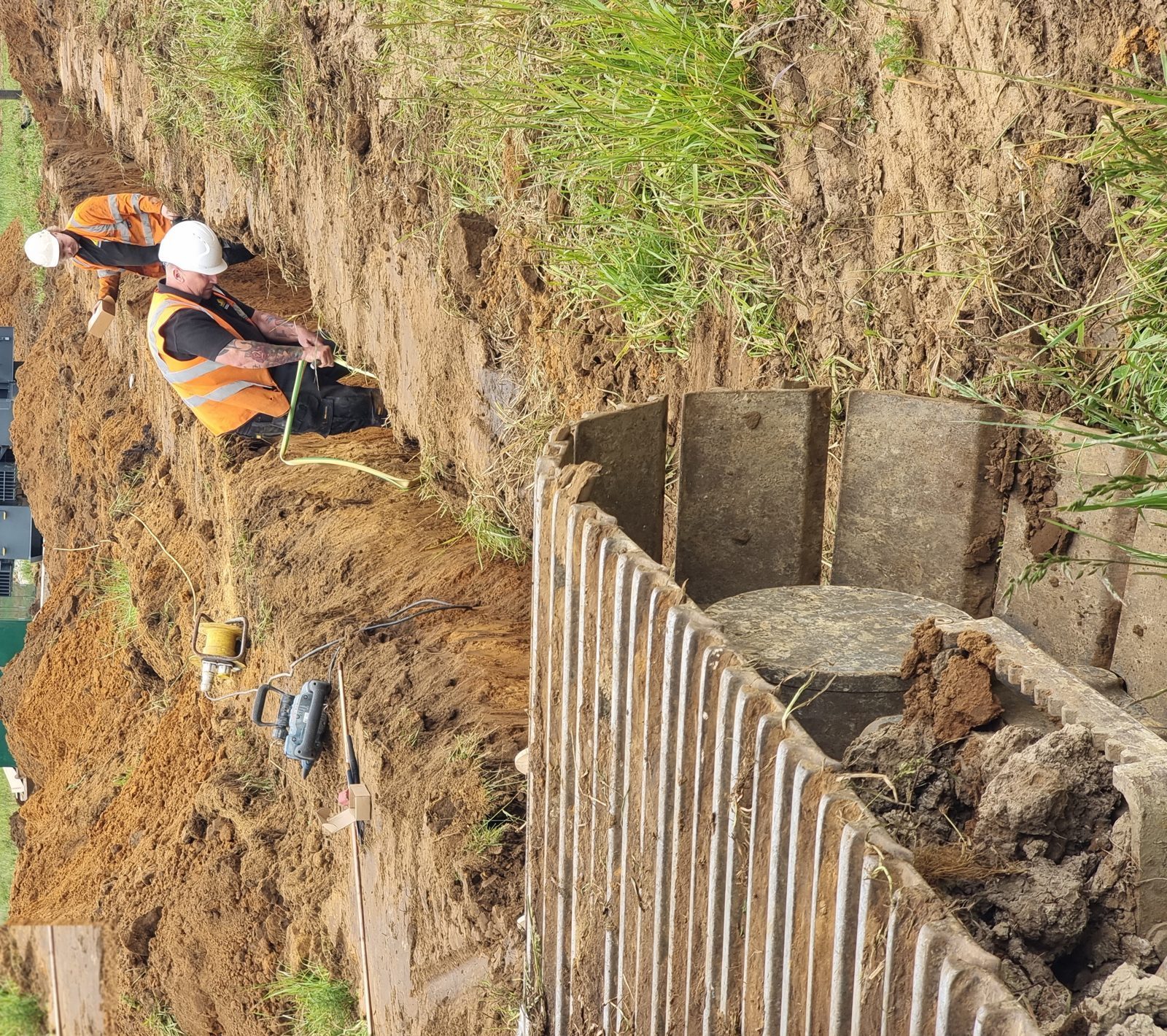
Excavation, ducting and reinstatement for the DNO cable route — the contestable trenching that carries the connection to the point of supply.
HV and LV cable corridors, draw pits and joint bays, through to cable entries and terminations at the units.
Earthing systems around the units — earthing rings, earth mats, rods and conductor installation, with the associated excavation works.
Setting ring main units and switchgear, and constructing the special housings and enclosures that protect them.
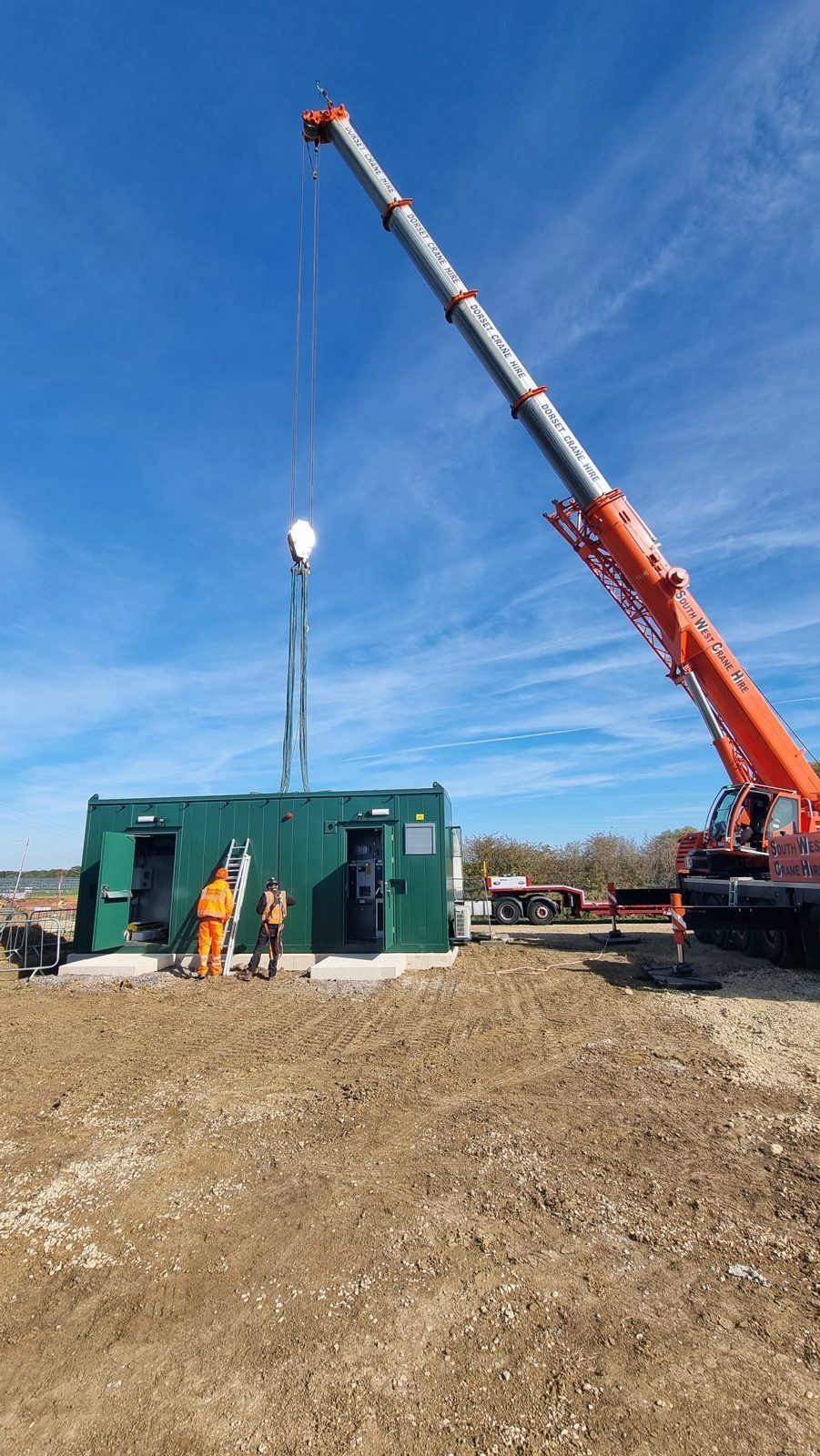
Preparing crane pads and managing the lifts that set transformers, RMUs and switchgear safely onto their bases.
Liaising with the DNO throughout the contestable works, so the build meets their requirements and the connection lands on programme.
The contestable works still have to satisfy the Distribution Network Operator — so the trenching, ducting, earthing and cable entries are built to their requirements. HWBC delivers that DNO-side infrastructure and liaises with the DNO and the wider project team throughout, so the connection is ready when its slot comes and energisation stays on programme.
Earthing & DNO · West Northamptonshire
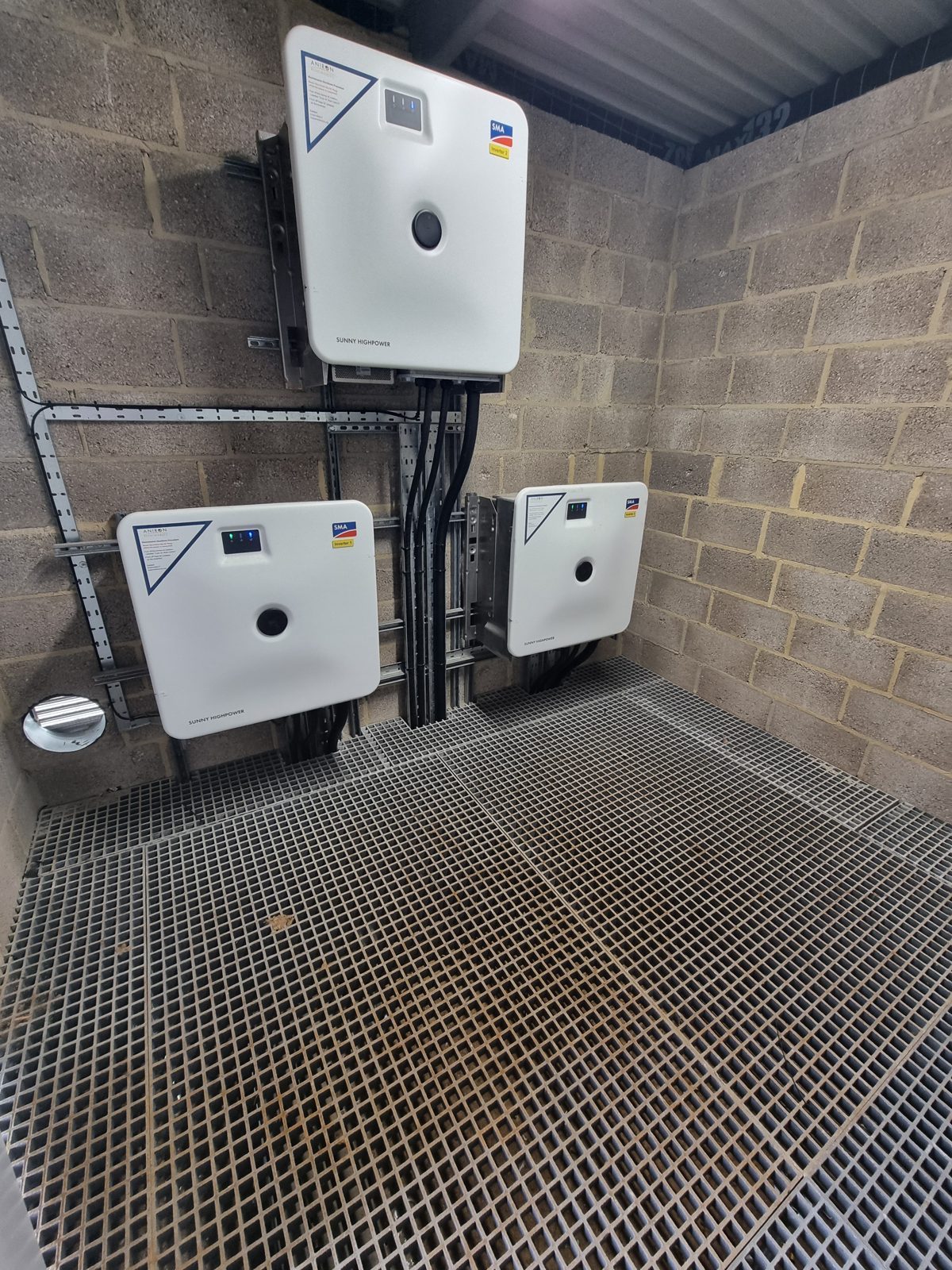
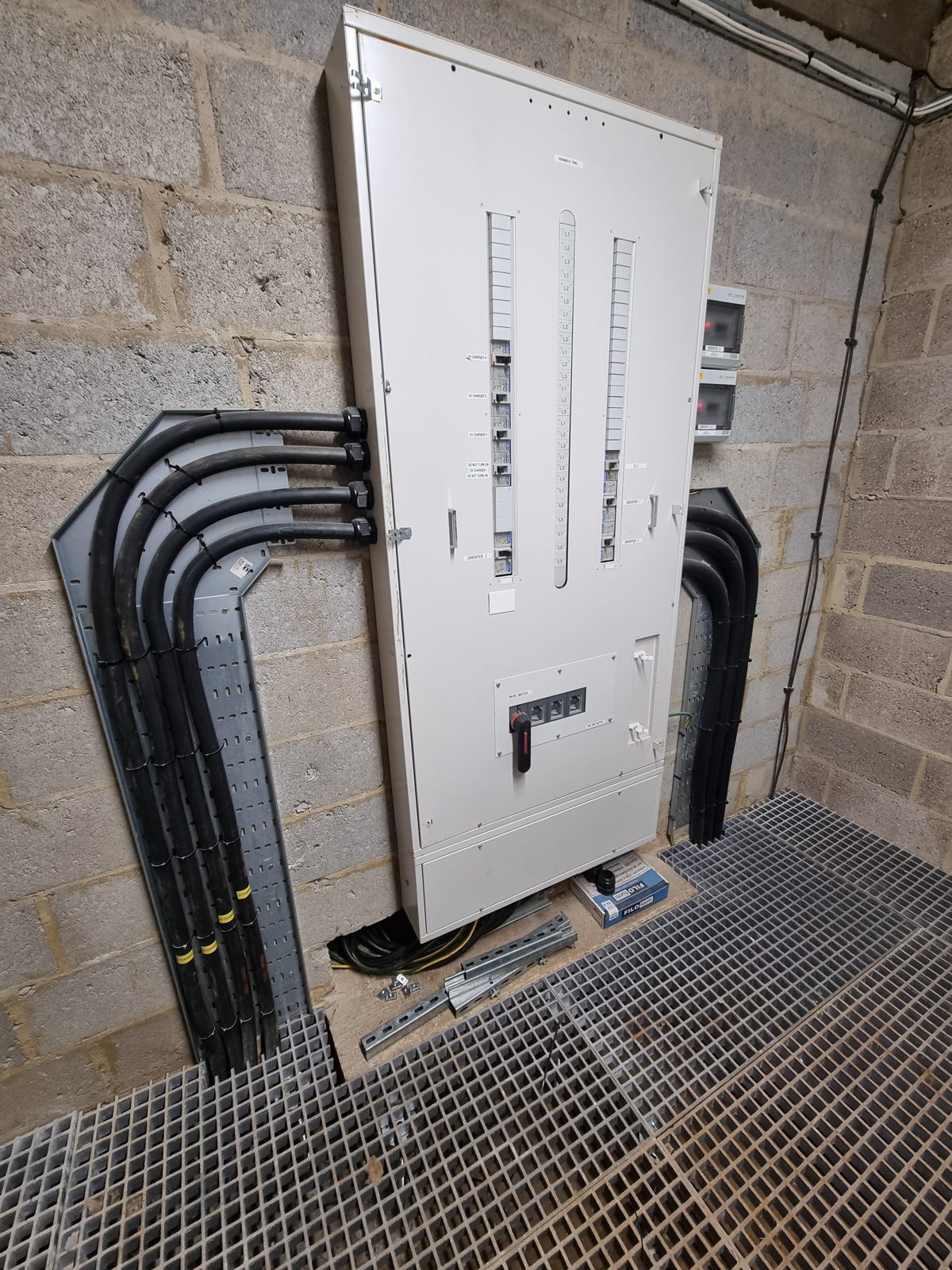
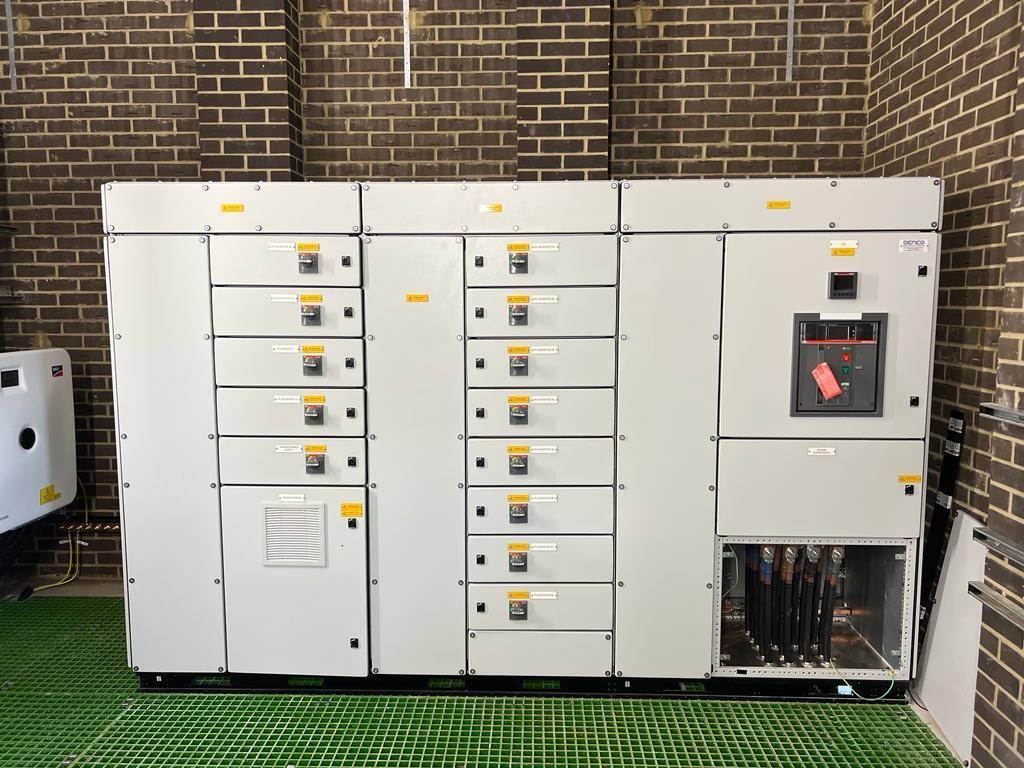
Beyond the foundations and the compound, HWBC constructs the self-contained control room buildings that house a site's electrical heart — the inverters, switchgear and distribution boards. We build the structure and fit it out, including specialist GRP grating floor systems that give safe access over the cable voids below while letting cabling run cleanly beneath the equipment.
One in-house team takes the electrical infrastructure from the concrete base through to a finished building ready for commissioning.
Control room · GRP grating floor
Work through the connection design, foundation loads and DNO requirements with the project team.
Construct foundations, compounds, earthing and control rooms; prepare crane pads and support the equipment lifts.
Install cable infrastructure, tie in the DNO connection, and support the works through to energisation.
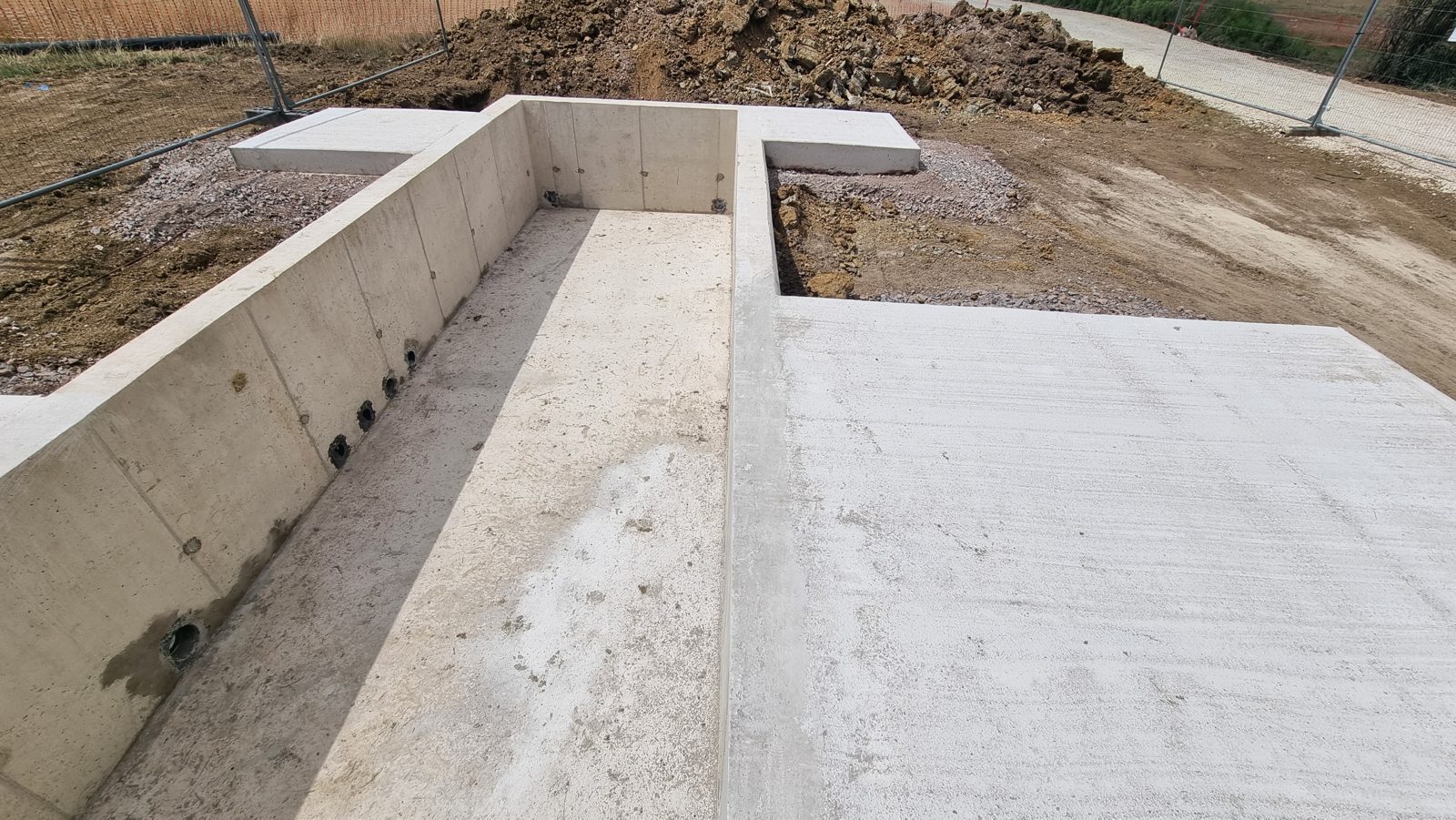
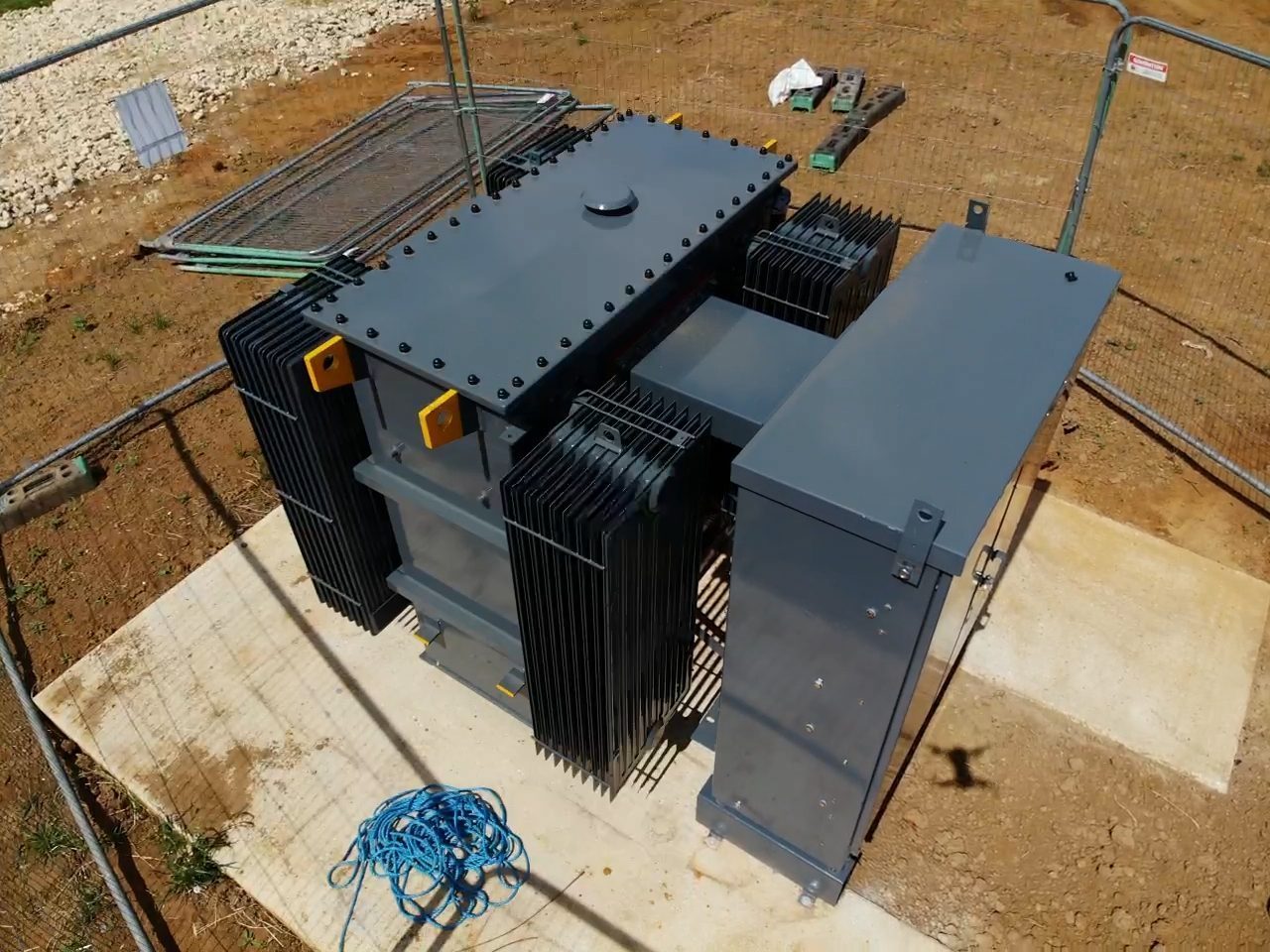
HWBC built the reinforced concrete foundations for a combined switchgear and transformer unit — rebar cages and column formwork through to the finished base with cast-in duct entries — then prepared and supported the crane lift that set the unit in place.
Finished base
Setting the unit
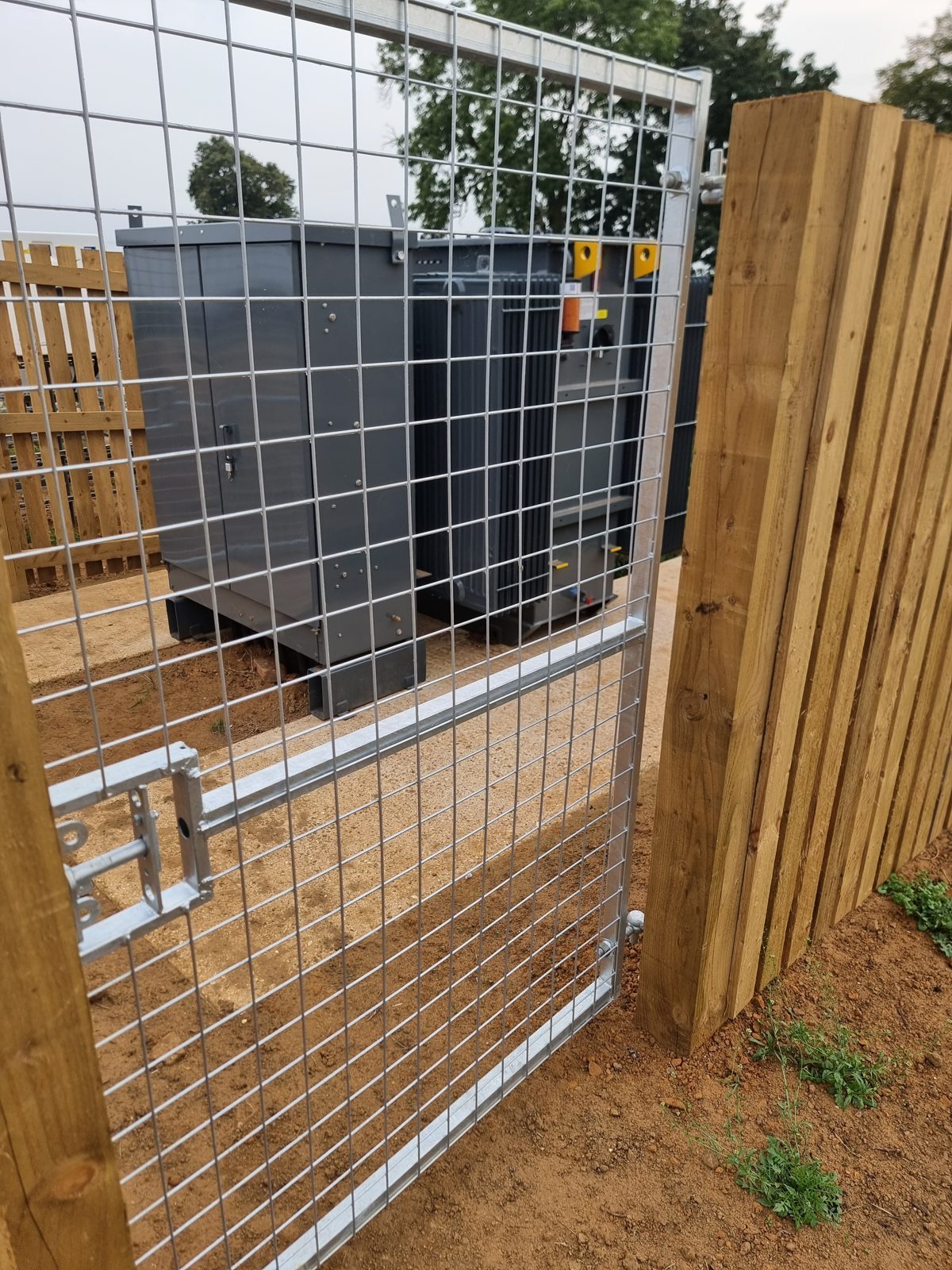
Finished compound
Distribution board
Switchgear lineup
Transformer set